Selling · Staging

Buyers decide on the phone scroll — before the open house.

In the Bay Area, the first competitive read happens online, not at the door. Staging is the tool that controls what buyers see in the thumbnail, the listing video, and the first ten seconds of a showing. Done well, it shifts the buyer's internal question from 'does this work for me?' to 'how soon can I move in?'

Staging as marketing

Why staging is not decoration.

§ Visual narrative

The home tells a story before anyone walks in.

Photography, video, and thumbnails are the first showing. Staging controls what that first showing communicates — scale, light, lifestyle, price tier. Buyers form a strong impression before they book a tour; staging determines whether that impression is accurate or disappointing.

§ Target buyer's lifestyle

Style follows the buyer, not the seller.

A $5M Atherton family stages differently than a $5M Cupertino tech household. Room scale, kitchen work-surface emphasis, primary-suite proportions — every decision should follow from the target buyer's actual daily life, not from generic "luxury" tropes.

§ Pre-open-house weight

The first competitive read happens before the open house.

Active comps set the visual benchmark buyers are judging against. Your home does not need to be the most stylish on the street — it needs to be the one buyers prefer when scrolling past its three closest competitors on a Saturday morning.

How we approach it

Four steps, in order.

§ 01

Establish the listing position.

School-district family home, move-up, luxury, or investor-grade — each calls for a different staging logic. A fixer priced on land value needs almost none; a $10M estate competing against three similar listings needs a complete visual strategy. We determine which situation you are in before recommending a budget.

§ 02

Declutter, depersonalize, then build scenes.

Remove visual noise first. Then use furniture, light, textiles, and art to construct "imaginable life" — not a showroom, but a legible version of the buyer's next chapter. Living room, kitchen, primary suite, and rear yard are the four nodes that drive most first-impression decisions on Peninsula listings.

§ 03

Coordinate staging with content production.

Photography, video, and short-form clips should shoot the day staging is complete — before anything is moved. Staging without supporting visual assets wastes half its value. The asset library is the pitch; staging and photography are one system, not two independent projects.

§ 04

Read the first-week signal.

High clicks but weak showings: likely a price or title issue. Strong showings but thin offers: likely a mismatch between the online presentation and the in-person experience. We review first-week data and make adjustments — staging is not a one-and-done decision.

Room-by-room

Before and after — what actually changes.

These are representative examples drawn from past listings. Every property is different, but the pattern — remove, neutralize, frame — is consistent.

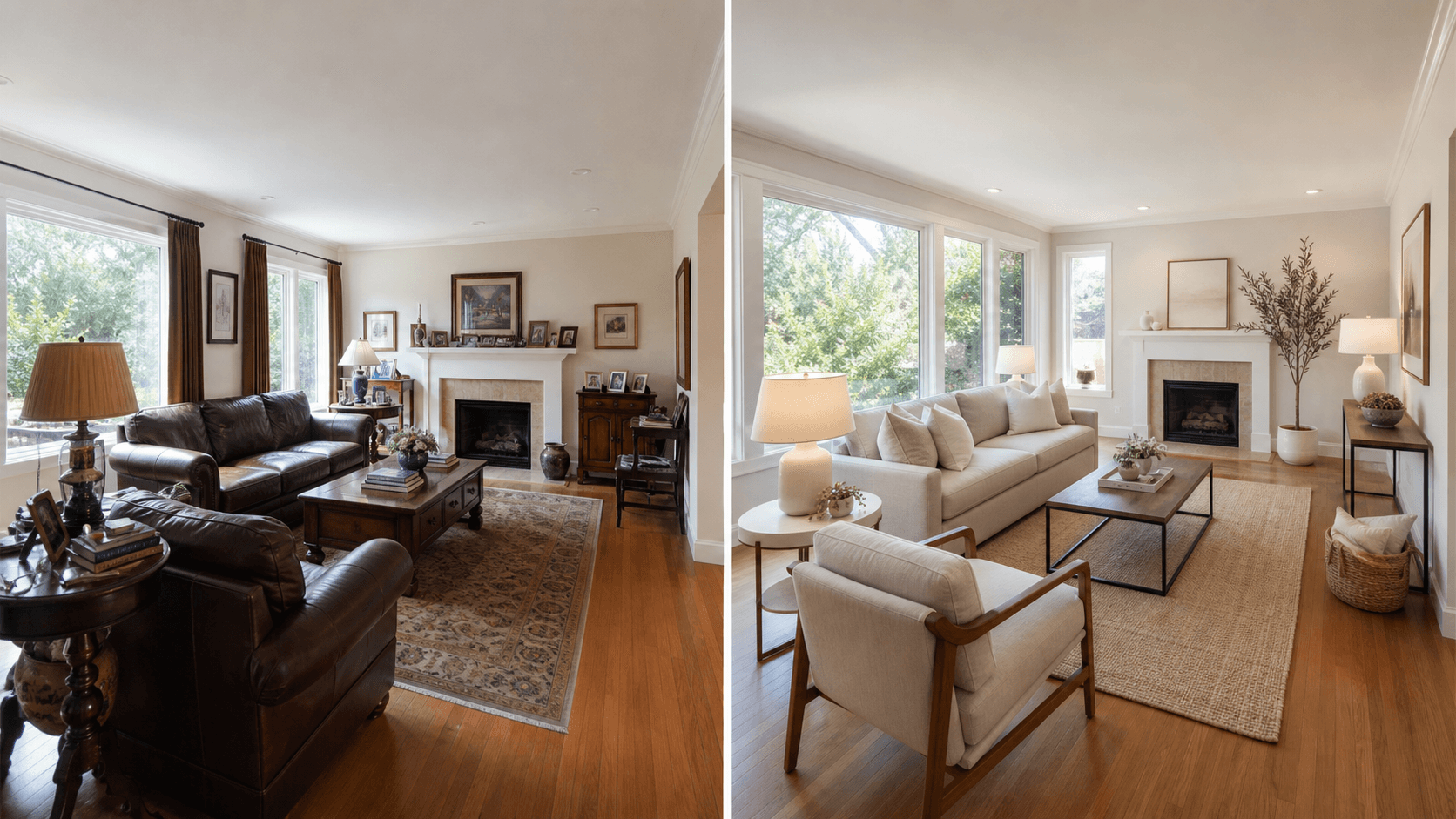
Living room · Palo Alto
Before

Dark legacy furniture, accumulated objects. Space reads as compressed in photographs.

After

Neutral palette, unified lighting, clear circulation path. Online save rate increased measurably in the first week.

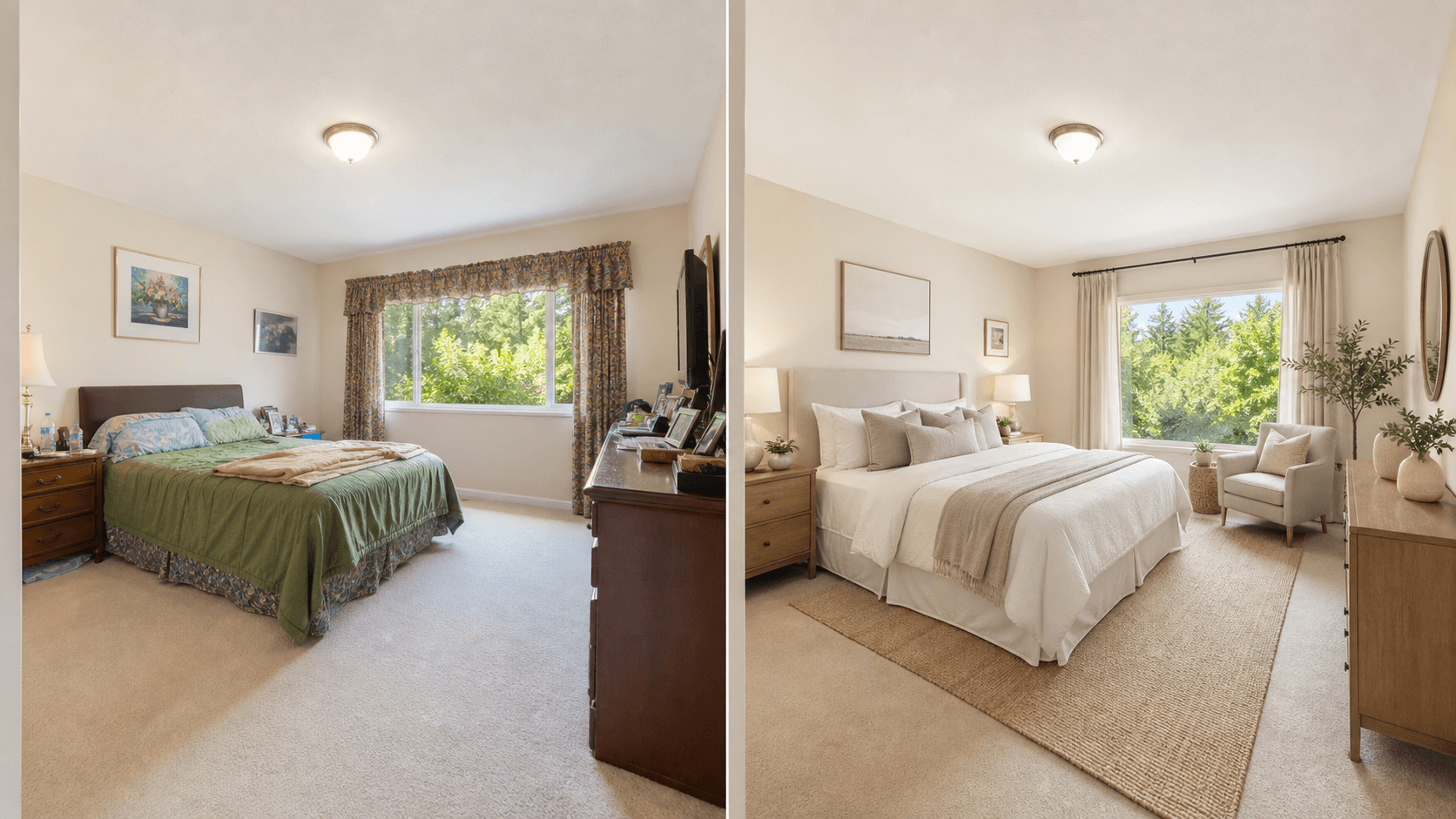
Primary suite · Cupertino
Before

Personal items throughout; room scale and natural light not apparent in listing photos.

After

Depersonalized layout with textile layering. Square footage and light quality become the story, not the contents.

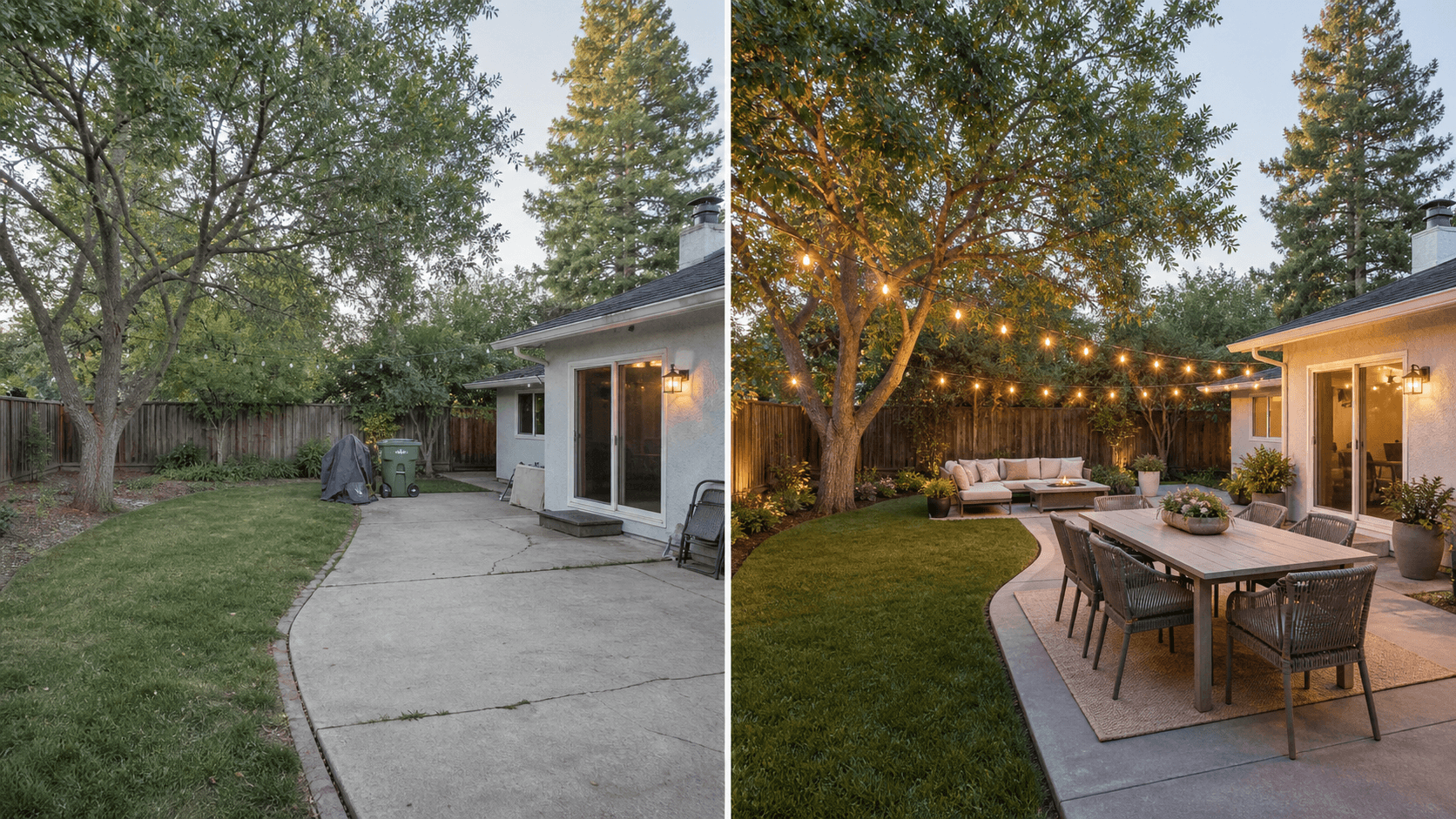
Rear yard · Los Altos
Before

Lawn and patio disconnected; use of the outdoor space unclear.

After

Distinct dining zone and lounge zone. Buyers can read the yard as a social venue — the most common buyer-feedback gap on Peninsula listings.

Kitchen
Before

Counters used as storage; appliances and personal items competing for visual focus.

After

Clear surfaces, one or two curated objects. The architecture of the kitchen — island, cabinetry, hardware — becomes legible.

Investment tiers

What different budgets buy.

Staging cost should be calibrated to the listing tier and competitive set, not estimated by square footage. These bands reflect typical Peninsula market practice.

Entry
$3,000 – $7,000
  • Declutter and depersonalize
  • Soft furnishings and accessory swaps
  • Targeted lighting updates
  • Professional photography coordination

Best for: listings where the existing furniture is neutral and the primary work is editing, not replacing.

Mid-range
$7,000 – $12,000
  • Full room-by-room scene build
  • Furniture rental for key spaces
  • Lifestyle accessory curation
  • Photography + listing video shoot

Best for: family-tier Peninsula listings competing against three or more actively staged comps.

Luxury
$12,000 – $20,000+
  • Full-property presentation design
  • High-quality furniture and art rental
  • Garden and exterior scene setup
  • Multi-angle photography, drone, and video

Best for: $8M+ listings where material quality, scale, and curation are themselves part of the price signal.

The economic case

What well-executed staging has returned.

A rough but useful framing: in Bay Area markets where staging, buyer profile, and pricing strategy are well-aligned, sellers in our experience have seen perceived value uplifts in the range of $5 to $15 for every $1 invested in staging.

That is a statement of typical experience, not a guarantee. The range is real — it compresses when the staging vocabulary does not match the buyer pool, and it expands when everything is coordinated: room focus, photography, pricing, and the first-week cadence. Staging alone does not move the number. Staging as part of a coherent listing strategy does.

Supporting data points from past listings (not averages, not promises):

+25% to +40%
First-week showing conversion
vs. comparable unstaged listings in the same period
~+30%
Online saves and inquiries
dependent on photo quality and listing title — staging alone is not enough
$5 – $15 per $1 invested
Typical return range
when buyer profile, home type, and pricing strategy align — not a guarantee
Who we work with

Three seller profiles.

§ Quality-first lister

Sellers who want to list once, and well.

High-quality staging, photography, and launch strategy aligned from the start. Not interested in price reductions after an underperforming first week. This is the majority of our selling clients.

§ Conversion-focused owner

Owners who want to improve online click-to-showing conversion.

Sometimes the home is already attractive but the listing photography or staging vocabulary is not landing with the buyer pool. We diagnose where the drop-off is and fix the specific weak point — often without a full restage.

§ Budget-conscious family

Families who want strong results without over-investing in staging.

Not every property needs $15,000 in furniture rental. We help identify the three or four highest-leverage moves — often decluttering, lighting, and one or two accessory swaps — and stop there if the competitive set permits it.

Frequently asked

Questions we hear most.

Does selling a home vacant save time and money?

Sometimes. But most Peninsula family homes lose measurable ground on space perception, emotional resonance, and online engagement when listed vacant. Buyers have a harder time reading scale and imagining daily life — both of which affect how quickly and how strongly they commit to an offer.

How should staging budget be determined?

Budget should follow the listing tier, the target buyer profile, and the competitive environment — not square footage alone. Entry staging typically runs $3,000–$8,000; a full-property presentation at the $8M–$15M tier usually requires $8,000–$20,000. We help calibrate this before the vendor call.

How soon does staging investment show a return?

Feedback is usually visible in the first week: click-through rates, showing requests, and offer volume all shift. Whether that converts to a higher sale price depends on how well the staging matches the buyer profile and how cleanly the pricing strategy is set. There is no guarantee — but well-executed staging has consistently shortened time on market in our experience.

Should cosmetic repairs come before or after staging?

Repairs first. Address anything that affects perception or function — walls, lighting, flooring — then layer staging on top to amplify the space and communicate a lifestyle. Staging over deferred maintenance signals rather than conceals the problem.

Is luxury staging different from staging a $3M family home?

Yes. At the $8M+ tier, the emphasis shifts to materiality, scale, privacy, and a sense of curation — fewer pieces, higher quality, more considered placement. At the family-home tier, the priority is warmth, functional room narrative, and legible daily-life scenes. Same discipline, different vocabulary.

Talk to a founder.

30 minutes. No pitch. We tell you what is actually possible at your tier and timeline.

Schedule a call
WeChat